
© 2026 Made for Planet • Privacy Policy • Terms & Conditions
Platform by Mission Sustainability
By Rittika rana • Nov 20, 2025
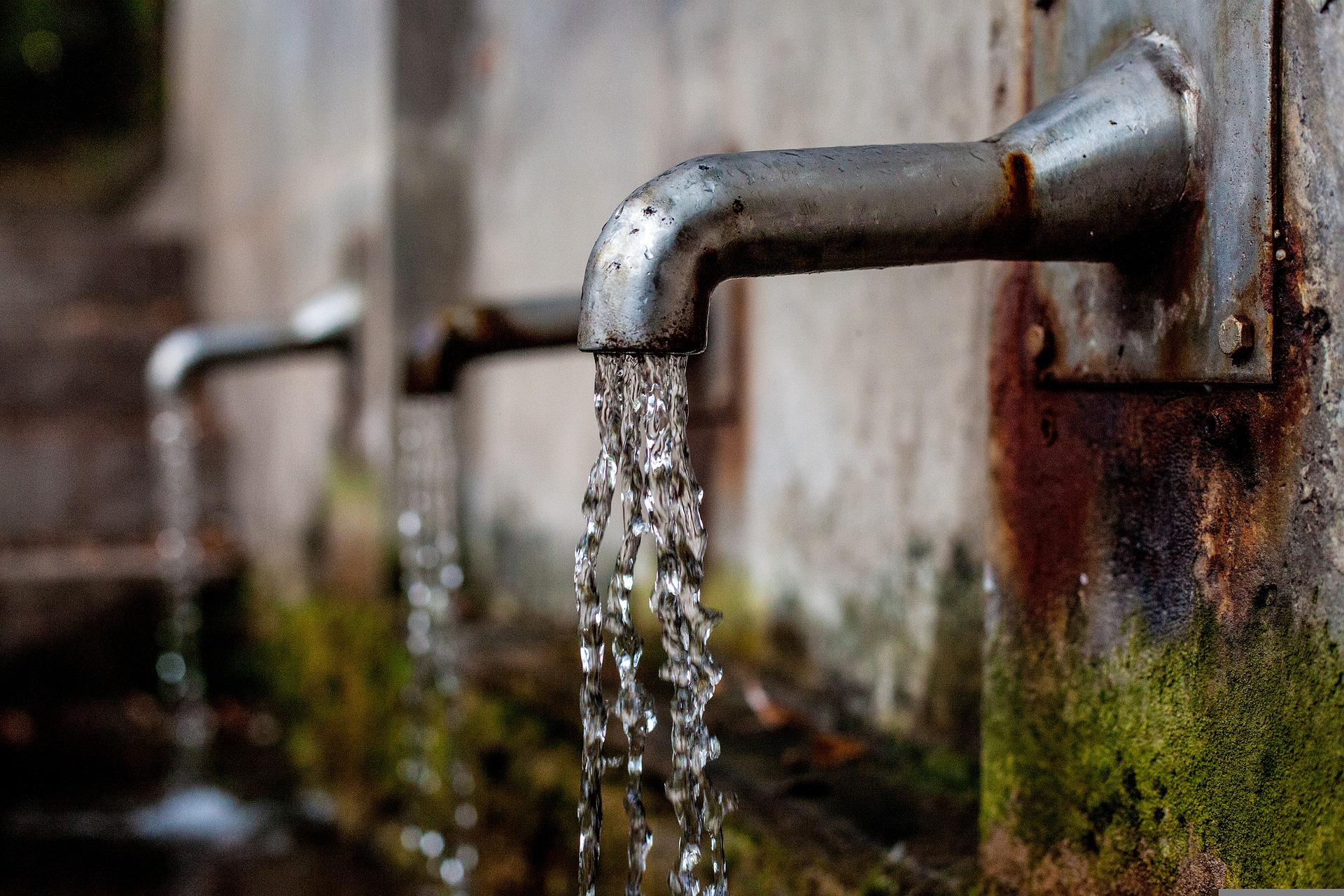
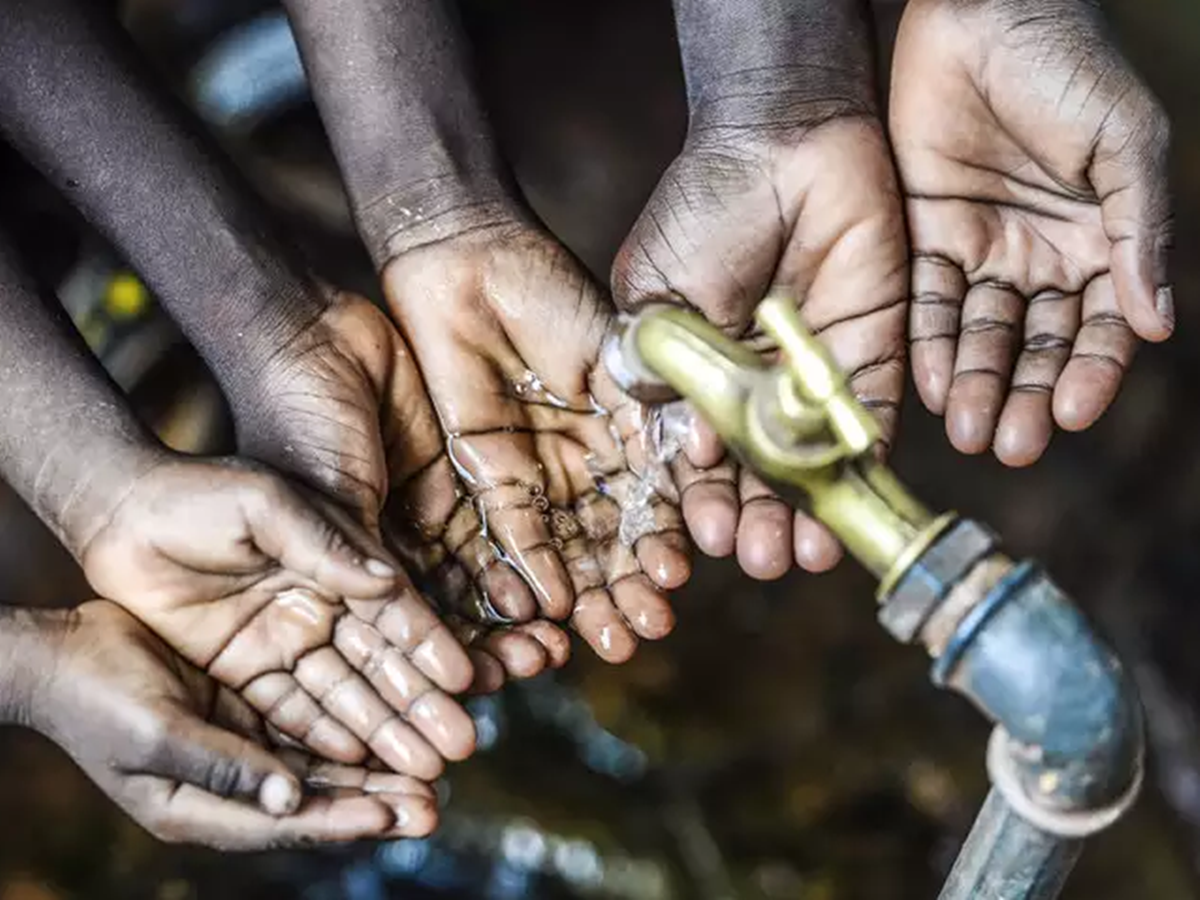
India today stands at a water crossroads. The country holds 18% of the world’s population, but only 4% of global freshwater. Groundwater extraction is among the world’s highest, droughts and floods occur simultaneously, and climate change is pushing communities into deeper water insecurity.
Yet, across India, a group of powerful NGOs is working every day to restore lakes, recharge groundwater, revive rivers, and build local water resilience. This blog highlights 10 leading NGOs shaping India’s water-secure future.


Water scarcity in India is not only about lack of rainfall — it’s about mismanagement, rapid extraction, urbanisation, and degradation of natural water bodies. Lists curated across India consistently highlight the need for organisations that focus on restoring water bodies, improving groundwater recharge, and strengthening community-led conservation efforts.
These NGOs play a crucial role by:
Rebuilding traditional water systems like johads, tankas, bunds
Restoring lakes, ponds, wetlands, and rivers
Training rural communities on efficient water use
Supporting agriculture through watershed development
Reducing dependence on tanker-water and unsafe sources
Founder: Arun Krishnamurthy
Headquarters: Chennai, Tamil Nadu
Focus: Scientific lake and pond restoration
Where they work: 18+ states across India
Website: https://indiaenvironment.org/
EFI is one of India’s most recognised lake-restoration organisations. Their projects combine ecology + community participation, using scientific methods to clean lakes, strengthen bunds, restore inlets/outlets, and reintroduce native biodiversity.
Impact highlights:
Restored 400+ lakes and ponds across India
Strong volunteer participation, especially youth
Urban freshwater conservation in cities like Chennai, Hyderabad, Pune
EFI’s model is clean, replicable, and perfect for urban water-body rejuvenation.
Founder: Rajendra Singh (also known as The Waterman of India)
Headquarters: Bhikampura, Alwar, Rajasthan
Focus: Rainwater harvesting, johad construction, river revival
Website: https://tarunbharatsangh.in/
TBS revived the concept of johads—traditional earthen structures that capture rainwater and recharge groundwater. Their work demonstrates how rural communities can regenerate entire river systems.
Impact highlights:
Constructed 11,800+ johads (traditional check-dams)
Revived 11 rivers in Rajasthan
Helped bring back water security to 1,000+ villages
TBS is a benchmark for integrating afforestation + water catchment restoration — directly relevant to plantation programmes.
Founders: Local communities with leadership from Maharaja Gaj Singh II
Headquarters: Jodhpur, Rajasthan
Focus: Traditional water systems like tankas, groundwater recharge
Website: https://jalbhagirathi.org/
Working in the Marwar desert, JBF promotes community-driven water systems adapted to extreme aridity.
Impact highlights:
Supported thousands of families with roof-based water harvesting systems
Revived traditional water practices in desert communities
Strong women-led participation in water governance
They work where rainfall is low but community resilience is high.

Founders: Suri Sehgal & Edda Sehgal
Headquarters: Gurugram, Haryana
Focus: Groundwater recharge, check-dams, school water systems
Website: https://www.smsfoundation.org/
The Sehgal Foundation focuses on dryland water solutions — especially in Haryana, Rajasthan, Uttar Pradesh, Telangana.
A GiveIndia report also lists the Sehgal Foundation among top water conservation NGOs in India.
Impact highlights:
Improved water access for 5.2+ million people
Constructed check-dams, recharge wells, and soak pits across 12,000 villages
School-based water systems that recharge 1.5 million litres annually
Strong SDG-aligned approach (SDG 6 – Clean Water)
Founders: Fr. Hermann Bacher & Crispino Lobo
Headquarters: Pune, Maharashtra
Focus: Watershed development, climate resilience, sustainable farming
Website: https://wotr.org/
WOTR runs one of India’s largest integrated watershed programmes.
Impact highlights:
Impacted 5+ million people
Regenerated 2.2+ million hectares of degraded land
Created 158 billion litres of water harvesting capacity (check-dams, trenches, bunds)
Strong focus on climate resilience and rural livelihoods
Their approach is highly aligned with afforestation and landscape restoration projects.
Founder: Ayyappa Masagi
Headquarters: Bengaluru, Karnataka
Focus: Borewell recharge, rainwater harvesting systems
Website: https://waterliteracyfoundation.org/
Ayyappa Masagi (the “Water Warrior”) pioneered techniques for borewell rejuvenation and water harvesting in rocky regions.
Impact highlights:
Implemented projects in 36,000+ locations
Recharged 70,000+ borewells
Reached more than 1.5 million people through awareness campaigns
Their technical solutions are ideal for water-scarce, borewell-dependent regions.
Director: Stalin Dayanand
Headquarters: Mumbai, Maharashtra
Focus: Wetlands, mangroves, river pollution, eco-hydrology
Website: https://vanashakti.org/
Vanashakti works at the intersection of water + ecology + legal protection. They are known for protecting mangroves, wetlands, estuaries, and filing public-interest litigations for environmental justice.
Impact highlights:
Protected several major wetland ecosystems through advocacy
Filed landmark PILs to protect Mumbai’s rivers and mangroves
Strong citizen science programmes
Perfect fit whenever water conservation involves ecosystem-level protection.
Headquarters: Chennai; strong presence in Bengaluru
Focus: Youth-led lake cleanups & restoration
Website: https://bhumi.ngo/
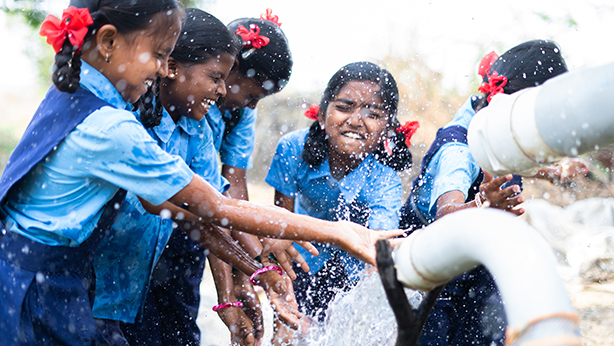
Bhumi engages thousands of youth volunteers in cleaning and restoring urban water bodies.
Impact highlights:
Cleaned/restored dozens of lakes & ponds in southern India
Mobilised 50,000+ volunteers
Urban lake conservation integrated with awareness and youth engagement
Ideal for community-driven, scalable water restoration.

Founder: Dr. Arvind Kumar
Headquarters: New Delhi
Focus: Water policy advocacy, community engagement, WASH awareness
Website: https://indiawaterfoundation.org/
IWF works closely with governments, UN bodies, and communities to improve water governance and behaviour change.
A number of national lists recognise the need for such organisations that address water conservation through awareness and mobilisation.
Impact highlights:
Large-scale awareness programmes across India
Partnerships with UN agencies for water sustainability
Focus on policy + community adoption
Founder: Suresh Reddy
Headquarters: Hubballi, Karnataka
Focus: Rainwater harvesting, direct borewell recharge
Website: https://srdsindia.org/
SRDS develops simple, scalable methods to recharge groundwater in rural India.
Impact highlights:
Implemented thousands of recharge systems
Focused on affordable, low-maintenance solutions
Supports farmers, schools, and village communities
Ideal for regions where groundwater is the primary water source.
What We Learned From These NGOs
Across these ten organisations, a few patterns appear:
1. Water conservation is deeply local
A johad in Rajasthan won’t work in Tamil Nadu. A wetland strategy in Mumbai won’t help Bundelkhand. Context is everything.
2. Community participation is non-negotiable
The most successful projects empower villages through Jal Sabhas, lake committees, women’s groups, and youth volunteers.
3. Water conservation boosts tree survival
Tree planting without water catchment = low survival rate. Tree planting with water structures = resilient, self-sustaining forests.
4. Traditional knowledge + modern science = powerful
Tankas + recharge wells Johads + GIS mapping Wetlands + hydrological modelling
India’s solutions lie in hybrid wisdom.
1. Which NGO is best for water conservation in India?
There is no single “best.” It depends on geography:
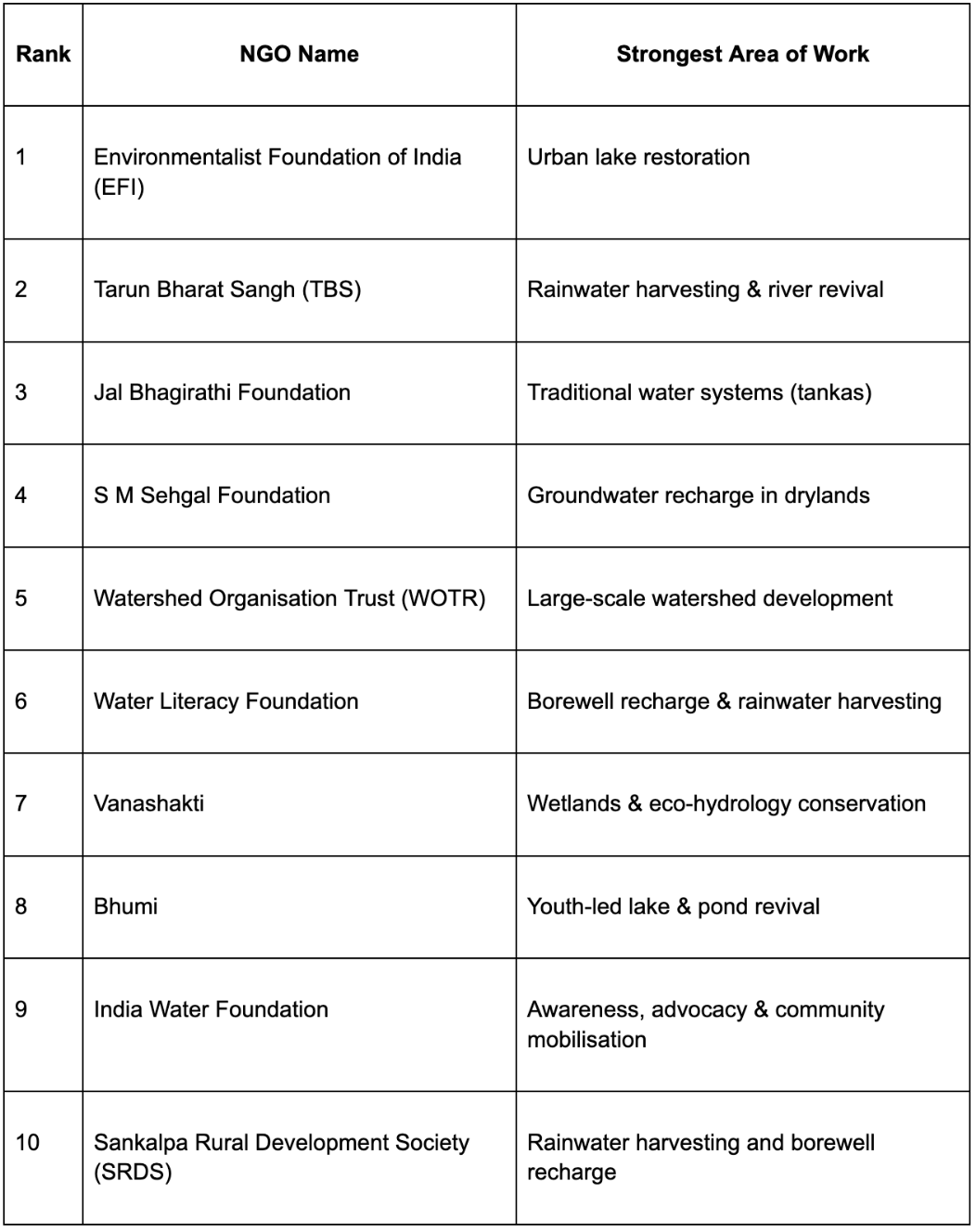
Urban lakes → EFI
Drylands → TBS, Jal Bhagirathi, Sehgal Foundation
Watersheds → WOTR
Groundwater → SRDS, Water Literacy Foundation
2. Can these NGOs partner with CSR projects?
Yes — many of them have active CSR collaborations and offer transparent reporting models.
3. What is the biggest challenge in water conservation today?
Groundwater depletion, urban encroachment on lakes, lack of community ownership, and climate variability.
4. Which NGO works with youth volunteers?
Bhumi and EFI have strong youth engagement programmes.
5. Which NGOs work on water + afforestation together?
WOTR, TBS, Sehgal Foundation — all integrate water and land restoration.
India’s water crisis is serious — but it is solvable. These ten NGOs prove that when communities, science, and traditional knowledge come together, water returns to even thedriest landscapes.
From large-scale watershed revival to grassroots rainwater harvesting, their work is building a water-secure India, one village, one lake, and one structure at a time.
If you are an organisation, student, donor, policymaker, or citizen, supporting these NGOs is one of the most meaningful actions you can take for India’s future.
1. Which NGO is most effective for water conservation in India?
There is no single “most effective.” The best NGO depends on your region and objective:
Urban lake restoration: EFI
Dryland recharge: TBS, Jal Bhagirathi Foundation
Large-scale watershed work: WOTR
Groundwater recharge: Water Literacy Foundation, SRDS
Wetland protection: Vanashakti
2. Do these NGOs accept CSR funding or corporate partnerships?
Yes. Almost all the NGOs listed work with CSR partners for projects like lake rejuvenation, watershed development, groundwater recharge, and rainwater harvesting. Many also provide detailed reporting, impact tracking, and long-term maintenance.
3. What kind of water conservation projects do these NGOs implement?
Projects include:
Rainwater harvesting systems
Lake and pond restoration
Check-dams, johads, bunds
Borewell recharge
Watershed development
Wetland and river protection
Community awareness and training
4. How can individuals volunteer with water conservation NGOs?
Organisations like EFI and Bhumi offer regular volunteer opportunities, especially for lake clean-ups. Many NGOs also conduct workshops, awareness drives, field visits, and seasonal restoration events.
Tarun Bharat Sangh (TBS) – Rajasthan
Jal Bhagirathi Foundation – Marwar region
SM Sehgal Foundation – Haryana & Rajasthan
WOTR – Maharashtra, Telangana, Madhya Pradesh These NGOs specialise in dryland water management and groundwater recharge.
Impact is measured through:
Increase in groundwater level
Litres of water harvested or recharged
Number of structures built (check-dams, tankas, recharge wells)
Restoration of lakes/ponds
Improvement in agriculture yield
Community participation and governance
7. Can these NGOs help with afforestation or tree-planting projects?
Yes. Many NGOs—like WOTR, TBS, and Sehgal Foundation—combine water conservation + land rejuvenation + afforestation, which leads to higher tree survival, better soil health, and stronger ecosystem restoration.
Related topics
Related Categories
Share this blog