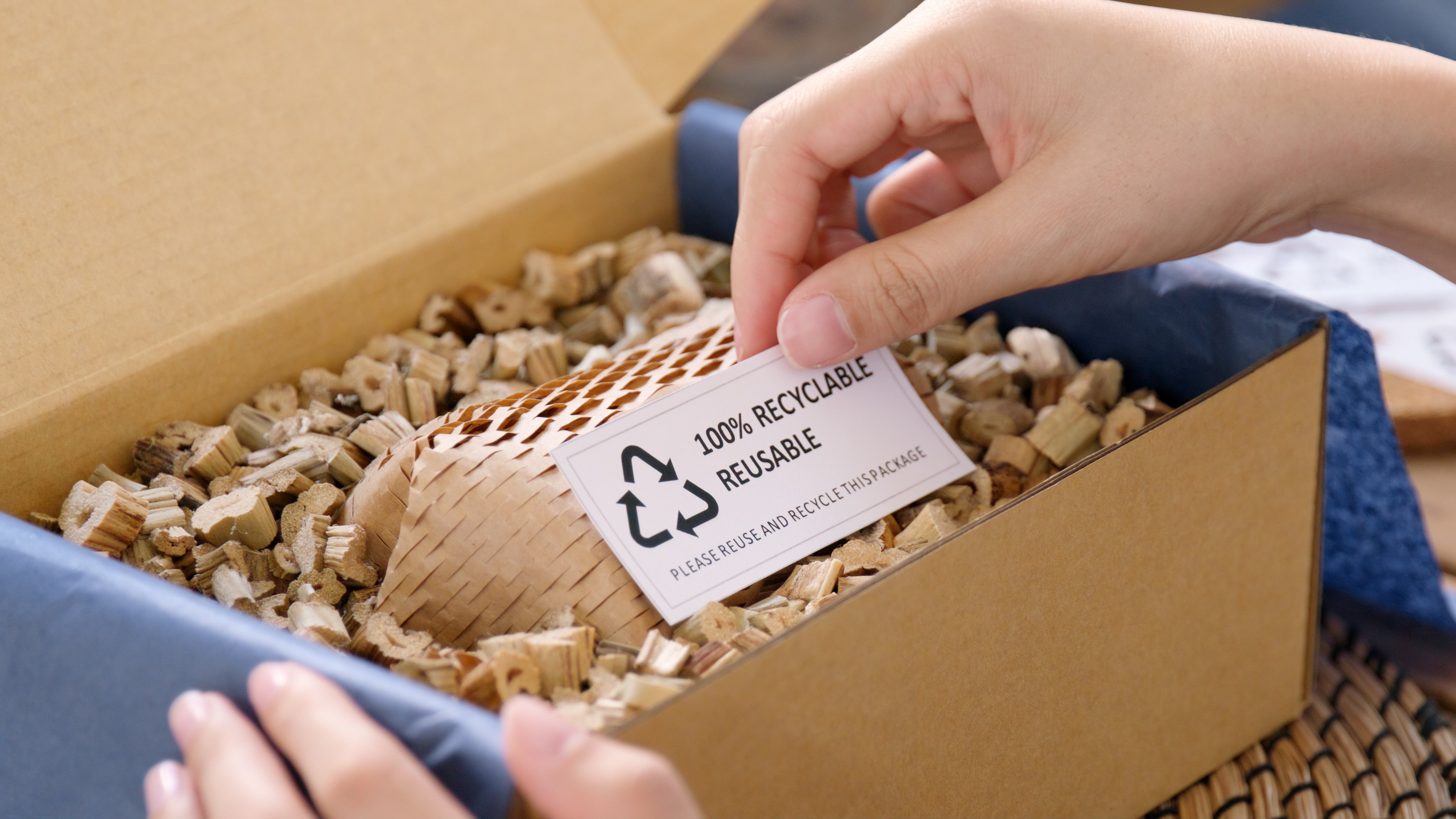
Introduction: Why sustainable packaging matters more than ever

Packaging accounts for over 40% of global plastic waste, and India alone generates 3.4 million tonnes of plastic packaging waste annually — most of which ends up in landfills or oceans (UNEP, 2023).
Businesses and consumers alike are now looking for alternatives that reduce waste, conserve resources, and lower carbon footprints.
That’s where sustainable packaging materials come in.
These are renewable, recyclable, biodegradable, or compostable options designed to minimize environmental impact without compromising durability or branding.
In this blog, we’ll explore the top 20 sustainable packaging materials that every eco-minded brand should know in 2025 — from everyday paper-based options to cutting-edge bioplastics and upcycled innovations.
1. Mushroom (Mycelium-based) Packaging
Why it’s sustainable
-
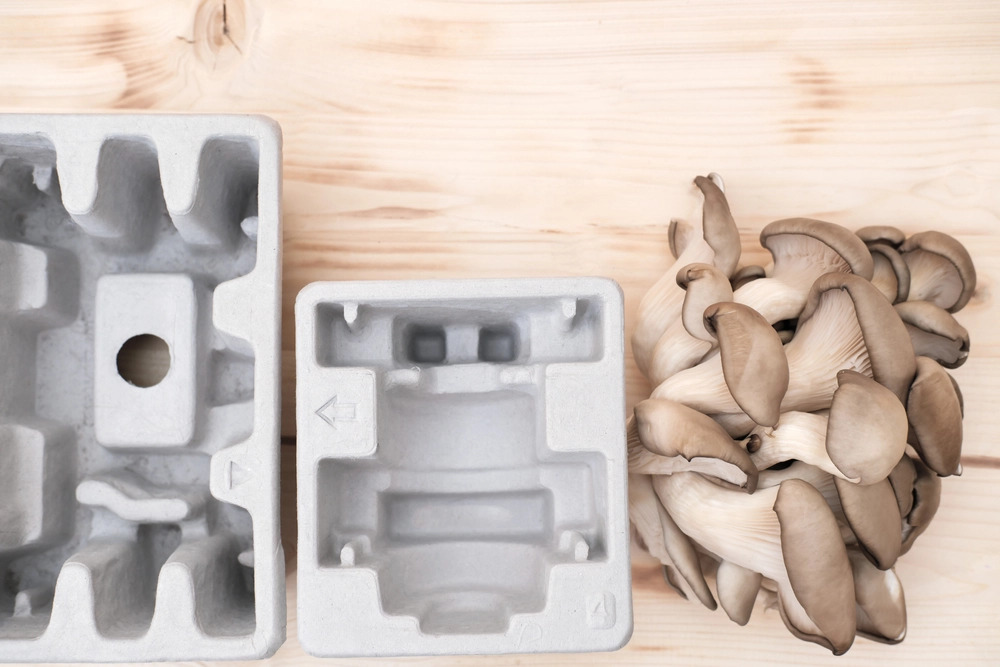
This material is produced by growing fungal mycelium (the root-like structure of mushrooms) around agricultural residue (such as hemp hurds, corn stalks etc.). One provider describes the process: “grows in 7 days, home-composts in 45 days”. Mushroom Packaging+3ecovative.com+3Mushroom Packaging+3
-
By using waste residues + biological growth, it avoids fossil feedstocks, has lower embodied energy, and at end-of-life returns to soil rather than sitting in landfill. E.g., one article: “biodegradable, renewable, uses waste, strong protective qualities”.digicomply.com+2grown.bio+2
-
Because it can replace forms of expanded polystyrene (EPS) or similar foams, it reduces plastic pollution and micro-plastics risk.Because it can replace forms of expanded polystyrene (EPS) or similar foams, it reduces plastic pollution and micro-plastics risk.Wikipedia+1
What to check / certification / considerations
- Check if the material is certified for compostability (industrial or home). Although for mycelium packaging the field is newer, but you want to verify that the supplier provides proof of biodegradation / compostability.
- Check sourcing: what agricultural residue is being used, is the mycelium growth process energy-efficient, and are there any additives/coatings that reduce biodegradability.
- Check performance: packaging must still protect the product (shock absorption, water resistance, durability). Some articles note moisture / scaling challenges. digicomply.com
- Ask for sustainability claims: e.g., number of days to compost, certification of the facility, life cycle assessment (LCA) if available.
Data / Source Links
- “Mushroom Packaging produces high-performing sustainable packaging grown in 7 days and home compostable in 45 days.” ecovative.com+1
- “Mycelium based… 100% sustainable, compostable, provides excellent protection, insulation and is lightweight.” grown.bio+1
- Wikipedia summary of mycelium-based materials: “mycelium composites present a sustainable biodegradable alternative … can convert waste into primary feedstock.” Wikipedia
2. Bagasse (Sugarcane Pulp) Packaging

Why it’s sustainable
What to check / certification / considerations
- Certifications: Look for compostability standards such as EN 13432 (Europe) for industrial composting, or ASTM D6400 (USA) where applicable. bioleaderpack.com+2TÜV SÜD+2
- Also check for home-compostable standards if you want consumers to compost at home (e.g., NF T51-800, AS 5810) in addition to industrial compost. biopak.com
- Confirm there are no added PFAS or harmful coatings which might compromise biodegradability or contaminate compost. biopak.com
- Check heat and oil resistance especially for food service applications—bagasse packaging may vary in performance if uncoated. One site states "oil-proof, water-proof and no deformation" for certain certified products. BIOPACKABLE
Data / Source Links
- “Certified under EN13432 … breaks down naturally within 30–90 days in composting conditions, leaving no toxic residue or microplastics.” InNaturePack
- “Packaging made from sugarcane bagasse meets multiple international environmental standards and regulations.”“Packaging made from sugarcane bagasse meets multiple international environmental standards and regulations.” BioPoly Lab
3. Recycled Plastic (rPET & rHDPE)

Why it’s sustainable
- Recycled plastics (for example recycled polyethylene terephthalate, rPET) divert used plastic from landfill or ocean, reduce demand for virgin fossil-based resin, and typically require less energy to produce. One guide notes “recycled plastics often bring environmental benefits … such as reduced embodied energy and carbon emissions from manufacturing.” Sustainable Packaging Coalition+1
- The rPET market is growing significantly: one forecast shows market doubling to USD ~26.78 billion by 2034. Plastics For Change
What to check / certification / considerations
- Check recycled content claims: Is it post-consumer recycled content or just pre-industrial scrap? Post-consumer recycled (PCR) is stronger from an environmental standpoint. PINNPACK
- Look for third-party certification of recycled content or chain of custody (for example SCS Recycled Content Certification) to substantiate claims. SCS Global Services
- Ensure material is suitable for the application (especially food contact if required). Not all recycled plastics are food-grade without special processing. Sustainable Packaging Coalition
- Consider the end-of-life and recyclability: While recycled material is good, if the resulting packaging cannot be recycled further (mixed materials, unknown resins) you only delay waste rather than close the loop. The guide emphasises “reduce virgin plastic, then design for recyclability”. Sustainable Packaging Coalition
Data / Source Links
“Using rPET reduces virgin plastic production, lowers greenhouse gas emissions … one pound of rPET takes 79% less energy than virgin PET, greenhouse gas emissions reduced by 71%.” PINNPACK
“Recycled plastics often bring environmental benefits … reduce the demand for fossil feedstocks.” Sustainable Packaging Coalition
4. PLA – Polylactic Acid (Bio-based Plastic)

Why it’s sustainable
- Derived from renewable feedstocks like corn starch, sugarcane or cassava — not petroleum.
- Compared with conventional PET, it reduces GHG emissions by 60–80 % and uses ~ 50 % less energy in production.
- Compostable under controlled industrial conditions (≈ 60 °C, > 50 % humidity).
What to check / certifications
Valid compostability certification:
- EN 13432 (EU)
- ASTM D6400 (US)
- IS/ISO 17088:2021 (India)
Confirm that the product is industrial, not “home” compostable — and that local composting infrastructure exists.
Avoid PLA mixed with fossil plastics → non-compostable.
Sources / Data
- European Bioplastics factsheet (2024): “PLA can reduce GHG emissions by up to 80 % compared to conventional plastics.” (european-bioplastics.org)
- NatureWorks Ingeo LCA summary: energy use ≈ 40 MJ/kg vs 77 MJ/kg for PET (natureworksllc.com)
5. Cellulose Film (Bioplastic from Wood Pulp)
:max_bytes(150000):strip_icc()/using-and-cleaning-cellulose-sponges-1900888-03-4a2b7e404ff64264a2bbe3ac32b9bc0c.jpg)
Why it’s sustainable
- Made from renewable wood pulp; biodegradable and home-compostable.
- Transparent, breathable, anti-static; replaces polypropylene film or plastic windows in boxes.
What to check / certifications
- TÜV Austria OK Compost HOME or DIN CERTCO Home Compostable labels.
- Confirm pulp is FSC / PEFC-certified for responsible forestry.
- Avoid films with PVDC or acrylic coatings that impede compostability.
Sources / Data
- Innovia Films claims NatureFlex cellulose films “fully biodegrade within 12 weeks under home compost conditions.” (innoviafilms.com)
- Study on biodegradable cellulose films in Polymer Testing (2023) shows > 95 % disintegration in 90 days. (sciencedirect.com)
6. Seaweed Packaging

Why it’s sustainable
- Extracted from marine algae (agar, carrageenan); renewable, compostable and even edible.
- Cultivation requires no fertilizer, fresh water or arable land and sequesters CO₂.
- Decomposes within 4–6 weeks in soil or water.
What to check / certifications
- Marine Safe / OK Biodegradable WATER certifications (TÜV Austria).
- Ensure supply chain traceability of seaweed (avoid ecosystem overharvesting).
- Evaluate barrier properties → short shelf life if moisture exposure high.
Sources / Data
- Notpla reports carbon footprint “70 % lower than PET sachets.” (notpla.com)
- Frontiers in Sustainable Food Systems (2022): Seaweed films biodegrade 100 % in less than 6 weeks. (frontiersin.org)
7. Hemp Paper & Textiles

Why it’s sustainable
- Hemp grows fast (~ 4 months), uses ~ 50 % less water than cotton and restores soil health.
- Produces 3–4 × more fiber per acre than trees and absorbs 4 × more CO₂ during growth.
- Fully biodegradable and recyclable (up to 7 times).
What to check / certifications
- GOTS (Global Organic Textile Standard) for hemp fabric.
- FSC Mix or Recycled for hemp paper.
- Confirm chemical-free retting process (no sodium hydroxide discharge).
Sources / Data
- Industrial Crops & Products (2023) shows hemp paper emits 37 % less CO₂ than wood-pulp paper. (sciencedirect.com)
- FAO hemp report 2022 notes yield up to 6 t fiber per ha. (fao.org)FAO hemp report 2022 notes yield up to 6 t fiber per ha. (fao.org)
8. Palm Leaf Packaging

Why it’s sustainable
Made from naturally fallen areca or palm leaves, pressed into shape using heat and water only.
100 % biodegradable and home compostable within 60 days.
Utilizes a renewable waste stream in India and Southeast Asia.
What to check / certifications
Compostable ISO 17088 (India) or EN 13432 (EU) labels where available.
Ensure leaves collected sustainably (no tree damage).
Check moisture and oil resistance tests for food use (certified by FSSAI in India).
Sources / Data
Journal of Cleaner Production (2022) LCA shows palm-leaf plates have 68 % lower GHG than single-use plastic. (sciencedirect.com)
9. Coconut Shell Packaging

Why it’s sustainable
- Upcycles discarded coconut shells otherwise burned or landfilled.
- Naturally durable, heat-resistant and biodegradable.
- Encourages rural micro-enterprises and reduces waste.
What to check / certifications
- Confirm no synthetic lacquers or chemical bleaching used.
- For export, check phytosanitary treatment certificates (fumigation-free).
- Packaging can be endorsed under Fair Trade or Craftmark India standards for ethical sourcing.
Sources / Data
- Waste Management (2023) notes coconut shell reuse reduces waste volume by 22 %. (sciencedirect.com)
10. Aluminium & Tin

Why it’s sustainable
- Infinitely recyclable without quality loss.
- Recycling aluminium saves ~ 95 % of energy vs primary production and reduces CO₂ by 97 %.
- Closed-loop collection systems already exist worldwide.
What to check / certifications
- ASI (Aluminium Stewardship Initiative) certification ensures responsible mining & recycling.
- Request data on post-consumer recycled content % for packaging (cans, tubes, closures).
- For food use, confirm BPA-free lacquer coatings.
Sources / Data
- International Aluminium Institute (IAI) 2024: global average recycled content ≈ 36 %. (world-aluminium.org)
- Resources, Conservation and Recycling (2023) shows each ton of recycled Al saves ~ 14 MWh energy.(sciencedirect.com)
11. Cloth & Jute Bags

Why it’s sustainable
- Made from natural plant fibers (jute, cotton, or blended hemp), these bags are biodegradable, reusable, and low-carbon compared to single-use plastic.
- A single jute bag can replace up to 600 plastic bags over its lifetime.
- Jute cultivation absorbs ~2.5 tonnes of CO₂ per hectare and enriches soil fertility through nitrogen fixation.
What to check / certifications
- GOTS (Global Organic Textile Standard) for organic cotton or hemp blends.
- Fairtrade Textile Standard for ethical labor practices.
- BSCI or SA8000 audits for social compliance.
- Verify dyeing process is azo-free and low-impact certified.
Sources / Data
- Indian Jute Mills Association (IJMA, 2024): “India produces 1.6 Mt of jute fiber annually, offsetting 4 Mt CO₂e.” (ijma.org)
- Textile Exchange report (2023): Reusable textile bags reduce GHG footprint by 80 % vs. single-use LDPE. (textileexchange.org)
12. Cork Packaging

Why it’s sustainable
- Harvested from the bark of the cork oak tree (Quercus suber) without cutting the tree; bark regenerates every 9–12 years.
- Each harvest absorbs ~73 t CO₂ per hectare annually (World Cork Federation, 2023).
- 100 % natural, recyclable, lightweight, and compostable.
What to check / certifications
- FSC® (Forest Stewardship Council) certification for sustainable forest management.
- PEFC chain-of-custody verification for supply traceability.
- Ensure adhesives and coatings are solvent-free for recyclability.
Sources / Data
- Journal of Cleaner Production (2022): Cork stoppers emit 24 × less CO₂ than aluminum closures. (sciencedirect.com)
- WWF Iberia (2023) notes cork forests store 14 Mt CO₂ annually. (worldwildlife.org)
13. Cornstarch Foam

Why it’s sustainable
- Made from fermented cornstarch or tapioca starch, this biopolymer is biodegradable and compostable in both soil and water.
- Replaces petroleum-based polystyrene for void fill and insulation.
- Degrades in < 60 days in home compost or dissolves in water within minutes.
What to check / certifications
- EN 13432 or ASTM D6400 compostability labels.
- Confirm 100 % starch base (no PE blend).
- Store in dry conditions — susceptible to moisture degradation.
Sources / Data
- Polymers (2023): Starch foams reduce carbon footprint by 78 % compared with EPS. (mdpi.com)
- GreenCell Foam LCA: 70 % lower energy use than PS foams. (greencellfoam.com)
14. Bamboo Packaging

Why it’s sustainable
- Bamboo is one of the fastest-growing renewable plants — grows up to 1 m/day and regenerates without replanting.
- Absorbs 30 % more CO₂ and releases 35 % more oxygen than hardwood trees.
- Naturally antibacterial and compostable at end of life.
What to check / certifications
- FSC Bamboo Certification for responsibly managed plantations.
- Avoid melamine or resin coatings — can make bamboo non-compostable.
- Food-contact bamboo products require FDA / EU 1935/2004 compliance.
Sources / Data
- Bamboo Phytochemistry & Sustainability (2024, Elsevier): “One hectare of bamboo sequesters up to 17 t CO₂ annually.”
- Eco-Business (2023): Bamboo packaging reduces GHG emissions by 50 % over 10-year cycle. (eco-business.com)
15. Recycled Glass

Why it’s sustainable
- Infinitely recyclable without quality loss.
- Each tonne of recycled glass saves 315 kg CO₂, 1.2 t raw materials, and 30 % less energy in melting.
- Ideal for cosmetics, food jars, and premium beverages.
What to check / certifications
- Verify recycled content percentage (PCR%) via supplier certificate.
- Cradle to Cradle Certified® or LEED-compliant packaging indicates verified circular design.
- Avoid painted or metallized finishes that hinder recyclability.
Sources / Data
- Glass Alliance Europe (2024): EU glass recycling rate > 76 %. (glassallianceeurope.eu)
- EPA (2023): Each 10 % increase in cullet use = 2–3 % CO₂ reduction. (epa.gov)
16. Paper Honeycomb Boards

Why it’s sustainable
- Composed of kraft paper cells in hexagonal structure; provides high strength with minimal material.
- 100 % recyclable, lightweight, and biodegradable; replaces thermocol (EPS) and MDF for protective packaging.
- Uses ~60 % less raw material than solid board at equivalent strength.
What to check / certifications
- Ensure FSC-certified paper feedstock.
- Test compression (Edge Crush Test > 32 ECT = good transport durability).
- No plastic lamination → maintains recyclability.
Sources / Data
- Packaging Technology & Science (2022): Paper honeycomb core exhibits 15 MPa compressive strength at one-third the density of EPS. (wiley.com)
- Honeycomb India LCA: reduces packaging weight by 50 %, logistics CO₂ by 30 %. (honeycombindia.in)
17. Upcycled Agri-Waste Boards

Why it’s sustainable
- Converts farm residues (paddy straw, wheat husk, banana fiber, bagasse) into durable fiber boards — replacing plywood or particleboard.
- Avoids field burning and methane emissions; locks carbon for > 15 years in use phase.
- Entirely formaldehyde-free and recyclable.
What to check / certifications
- E0 / CARB Phase 2 formaldehyde-free compliance.
- GreenPro (CII) or Ecolabel (India) for environmental performance.
- Verify binder composition (bio-resin or lignin-based).
Sources / Data
- ScienceDirect – J. of Cleaner Production (2023): Agri-fiber boards reduce carbon footprint by 52 % compared with plywood.
- Craste India case: 100 t straw upcycled = 150 t CO₂e avoided. (craste.in)
18. Recycled Paper & Cardboard (Detailed Extension)

Why it’s sustainable
- Made from post-consumer wastepaper; requires ~60 % less energy and 40 % less water than virgin paper.
- Recyclable up to 7 times; biodegradable in 2–6 weeks.
What to check / certifications
- FSC Recycled or Blue Angel (DE-UZ 14a) ecolabel.
- Avoid plastic lamination or metallic foil → reduces recyclability.
- Water-based inks only.
Sources / Data
- Environmental Paper Network (2024): Each tonne of recycled paper saves 1.5 t CO₂ and 26 k litres of water. (environmentalpaper.org)
19. Kraft Paper

Why it’s sustainable
- Made from virgin or recycled wood pulp via sulfate process; strong, unbleached, compostable.
- Unbleached kraft avoids chlorine bleaching (reduces AOX emissions).
What to check / certifications
- FSC / PEFC for fiber source.
- Compostable IS/ISO 17088 or CII GreenPro certified for food wraps.
Sources / Data
- ScienceDirect – Resources, Conservation & Recycling (2023): unbleached kraft reduces life-cycle emissions by 38 % vs. bleached board.
20. Corrugated Cardboard

Why it’s sustainable
- 70–100 % recycled fiber content; 100 % recyclable, biodegradable and strong.
- Corrugated boxes can be reused 5–7 times; average recycling rate in India: > 85 % (CPPRI 2024).
What to check / certifications
- FSC Recycled, ISO 14001 environmental management.
- Confirm adhesives are starch-based (not synthetic).
- Ensure E-flute or B-flute grades match load requirements to minimize over-packaging.
Sources / Data
- Packaging Europe (2023): Corrugated boxes deliver 70 % lower CO₂e per shipment than rigid plastic crates. (packagingeurope.com)
The Bigger Picture
According to ScienceDirect (2024), switching just 30% of India’s packaging industry to sustainable alternatives could:
- Reduce CO₂ emissions by up to 12 million tonnes per year
- Save 1.8 billion litres of water annually
- Create over 200,000 green jobs in the next decade
Logistics giants like DHL and retailers like Unilever are already embedding circular packaging systems, proving that eco-friendly solutions are scalable and profitable.
Conclusion: Sustainability is the new standard
Sustainable packaging is no longer a niche choice — it’s becoming the default expectation.
From startups in Auroville crafting coconut shell bowls to multinationals piloting seaweed films, the movement is growing fast.
For brands, switching to sustainable packaging materials isn’t just an environmental step; it’s a business advantage that strengthens trust, reduces waste, and aligns with future regulations and consumer sentiment.
FAQs
Q1. What is the most sustainable packaging material?
A1. It depends on the application. For food packaging – bagasse or PLA; for shipping – corrugated cardboard; for luxury products – recycled glass or bamboo.
Q2. Is biodegradable packaging always sustainable?
A2. Not always. Some “biodegradable plastics” require industrial composting; if disposed of in landfills, they behave like regular plastic.
Q3. How can small businesses adopt sustainable packaging affordably?
A3. Start with recycled paper mailers, minimal ink printing, and supplier take-back programs.
References & Further Reading