

© 2026 Made for Planet • Privacy Policy • Terms & Conditions
Platform by Mission Sustainability
By Himanshu Jangid • Nov 06, 2025
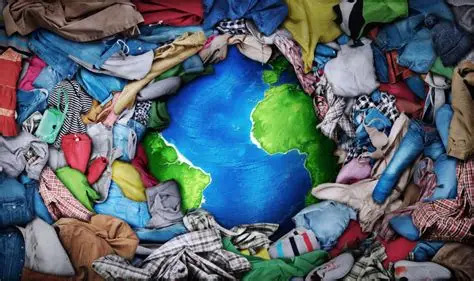
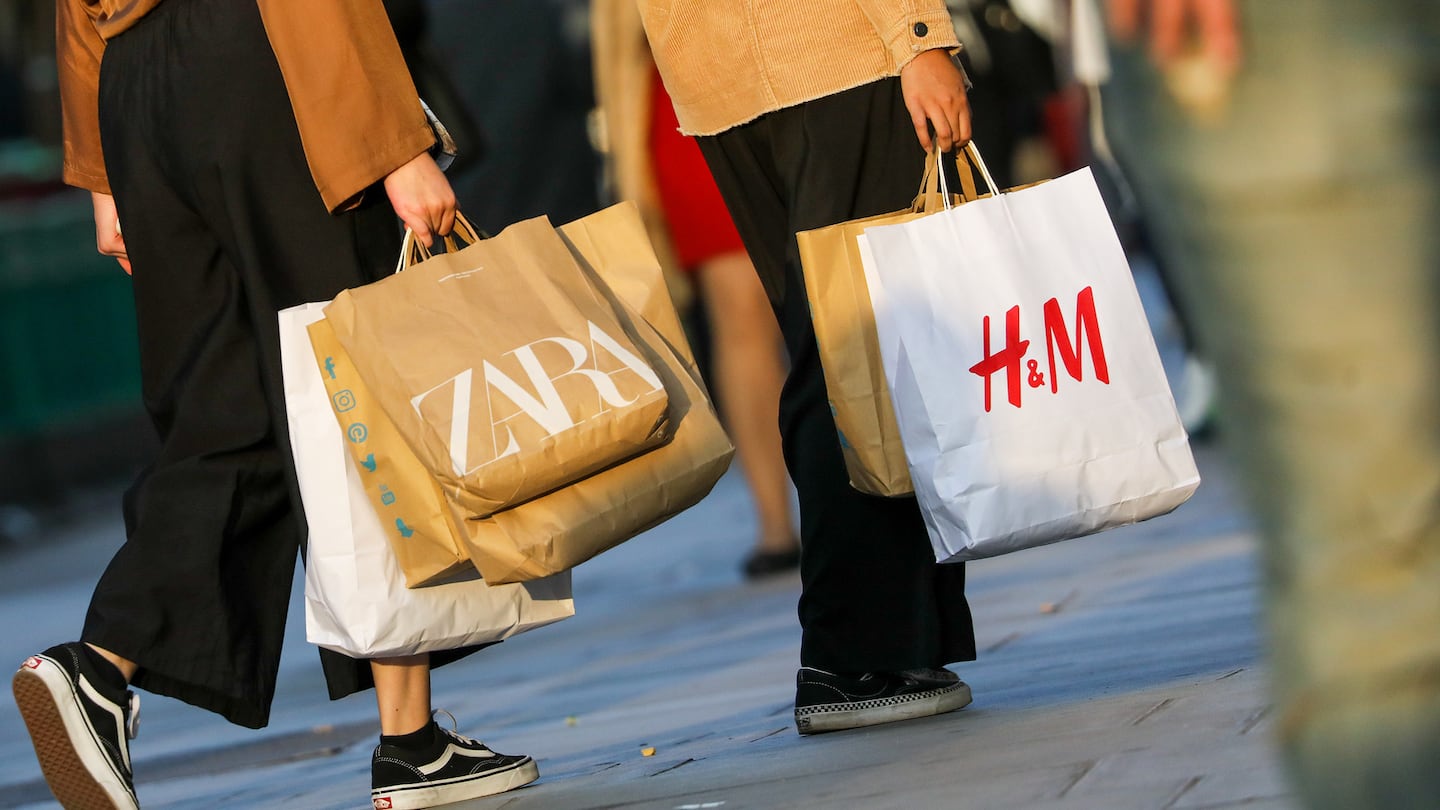
The term fast fashion refers to clothing production systems that emphasise rapid design, number of collections, low cost and quick turnover to meet emerging trends. It contrasts sharply with the slower cycles of traditional apparel, where design, sourcing, production and retail could take many months. Wikipedia Earth.org
For example, major fast-fashion brands historically have reduced lead-times down to just 10–15 days from design to retail shelf. Earth.org
This business model results in high volumes of garments, short usage lifespans and rapid disposal — all of which magnify environmental impact.

Not long ago, clothing was an investment. People purchased a few well-made garments and repaired them over time. Fashion followed clear seasons, and trends evolved slowly. Then came the 1990s and early 2000s — the era that transformed fashion forever.
Retail giants like Zara, H&M, and Forever 21 introduced a new model: producing clothes faster, cheaper, and in higher volumes. This was the birth of Fast Fashion — an industrial phenomenon that democratized access to style but quietly unleashed one of the most environmentally destructive business models in modern history.
Fast fashion is defined as the rapid production of inexpensive clothing collections that mimic current luxury fashion trends and are sold in high volumes. According to McKinsey’s “State of Fashion” report, new collections now appear every few weeks instead of twice a year, with lead times cut from six months to as little as 10–15 days. The goal is simple — constant novelty, constant consumption.
But behind the vibrant storefronts and influencer campaigns lies an enormous ecological footprint: resource depletion, carbon emissions, chemical pollution, and mountains of waste.

The fashion industry produces roughly 100–120 billion garments every year — that’s more than 14 pieces of clothing for every human on Earth. The Ellen MacArthur Foundation reports that clothing production has doubled since 2000, while the average lifespan of a garment has dropped by 36%.
Globally, textile consumption per capita has increased by nearly 60% in the last two decades, driven largely by fast fashion brands flooding the market with new drops every week.
Why does this matter? Because the fast fashion model depends on:
As a result, every phase of the garment’s life cycle — from fiber production to disposal — generates environmental damage at unprecedented scale.

The apparel and footwear sector contributes between 8–10% of global greenhouse gas emissions, according to the United Nations Environment Programme (UNEP). That’s more than all international flights and maritime shipping combined.
In 2023, the Apparel Impact Institute estimated total industry emissions at around 944 million tonnes of CO₂e, with polyester-based garments leading the increase due to their fossil origin.
Why such high emissions?
Energy-intensive manufacturing: The textile industry relies heavily on coal-fired power in countries like China, Bangladesh, and Vietnam, where most fast-fashion production occurs.
Synthetic fiber production: Over 60% of all clothing today is made from polyester — a plastic derived from petroleum. Producing polyester emits 2–3 times more CO₂ than cotton per kilogram of fiber.
Transport and logistics: Fast fashion’s globalized supply chains move raw materials, fabrics, and finished products across multiple continents, often by air freight for speed. Example: In 2024, Shein’s carbon footprint from air transport alone exceeded 8.5 million tonnes of CO₂e, a 13% year-over-year rise.
Short wear life → more production: When consumers buy more and wear less, total production — and hence emissions — escalate. A McKinsey analysis showed that doubling garment use-life could cut emissions by nearly 44%.

Few people realize that fashion is one of the most water-intensive industries on Earth. From cotton farming to dyeing, every stage consumes and contaminates enormous amounts of water.
Cotton cultivation uses approximately 2,700 liters of water to make one T-shirt — enough to sustain one person’s drinking needs for 2.5 years (WWF).
Globally, textile dyeing and finishing contribute 20% of all industrial wastewater (European Parliament, 2022).
In countries like India, China, and Bangladesh, rivers near dyeing clusters — such as the Buriganga and Citarum — are heavily contaminated with lead, mercury, and microfibres from untreated effluents.
The environmental impact isn’t limited to water use; it also extends to water pollution. Toxic dyes, bleaches, and finishing agents often flow directly into waterways. Aquatic ecosystems collapse under this chemical load, while communities downstream face health risks including skin diseases, gastrointestinal issues, and even carcinogenic exposure. Ironically, many of these polluted rivers are in regions that also suffer from freshwater scarcity. So, the water that sustains life is being poisoned to sustain fashion.
The shift from natural to synthetic fibers has allowed fast fashion to achieve the speed and cost efficiency it thrives on. But this shift comes with a silent pollutant: microplastics.
About 70% of all textiles today contain plastic fibers such as polyester, nylon, and acrylic.
Every time synthetic garments are washed, they shed thousands of tiny plastic fibers — invisible to the naked eye — that slip through wastewater filters and enter rivers and oceans.
The European Environment Agency (EEA) estimates that textiles account for 35% of all primary microplastics released into the oceans globally.
These fibers have been found everywhere — from Arctic ice to human lungs and placentas. Once they enter the food chain, they can bioaccumulate, posing risks to both wildlife and human health. Unlike organic materials, synthetic fabrics do not biodegrade. Instead, they break down into smaller and smaller plastic fragments that persist for hundreds of years.
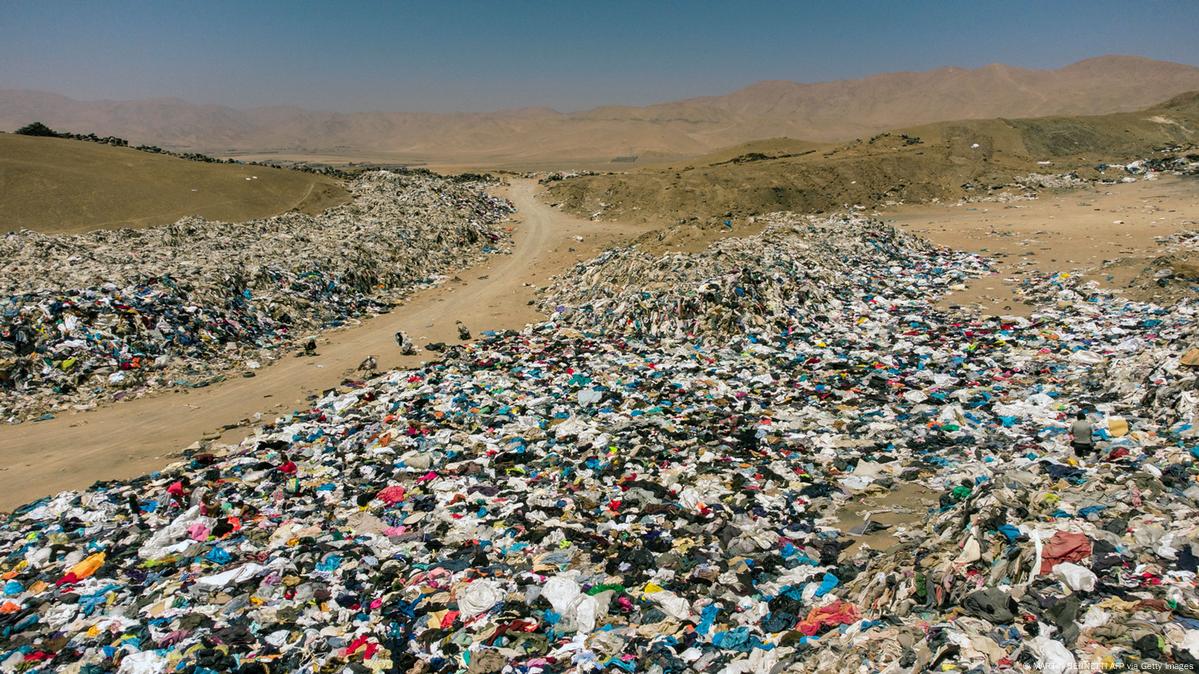
Fast fashion’s waste crisis is staggering. The Ellen MacArthur Foundation reports that the equivalent of one garbage truck of textiles is landfilled or burned every second.
Globally, we discard an estimated 92 million tonnes of textile waste annually, and by 2030 that number may reach 134 million tonnes.
In the U.S., 66% of textiles end up in landfills (EPA, 2023).
In the EU, citizens throw away an average of 12 kilograms of clothing per person every year.
A shocking one-third of new garments are never sold — many are burned or shredded to maintain brand exclusivity and manage overstock.
In places like Ghana’s Kantamanto market, where Western countries ship millions of used garments weekly, mountains of textile waste spill into rivers and beaches. Up to 40% of imported clothing is unsellable and ends up in open dumps or burned, releasing toxic fumes. Fast fashion’s waste isn’t just post-consumer. Overproduction — driven by trend forecasting algorithms — ensures that supply always overshoots demand.

Fast fashion’s low prices are possible only because of underpaid labor and unsafe working conditions. The 2013 Rana Plaza disaster in Bangladesh, where 1,134 garment workers were killed, exposed the grim human side of cheap clothing.
Beyond ethics, this exploitation directly links to environmental harm:
Factories under cost pressure cut corners on waste treatment and safety compliance.
Long hours and unregulated overtime perpetuate unsustainable production speeds.
Workers often live near polluted rivers and dump sites, bearing the brunt of contamination.
Thus, environmental sustainability cannot be achieved without social sustainability — fair wages, worker rights, and ethical sourcing are all part of the solution.

If traditional fast fashion was a sprint, ultra-fast fashion is a blur. Platforms like Shein, Temu, and Fashion Nova use AI-driven design algorithms and real-time social media analytics to release thousands of new styles daily.
The production scale is unprecedented: Shein alone releases 6,000 new items every day, and sells more than 1 billion pieces annually.
Ultra-fast fashion has replaced physical inventory risk with data-driven on-demand microbatches — yet paradoxically, the overall volume has exploded because of low prices and global e-commerce reach.
These clothes often travel by air freight to reach customers quickly, multiplying emissions. Moreover, return rates for online purchases can exceed 30%, with most returns being incinerated rather than resold.
In short: what once took months now takes hours, and the planet simply cannot keep up.

The global conversation is changing. Governments, consumers, and some brands are beginning to confront the true costs of fast fashion.
European Union Leadership
The EU Strategy for Sustainable and Circular Textiles (2022) sets ambitious goals:
All textile products sold in the EU must be durable, repairable, and recyclable by 2030.
Greenwashing will be penalized; brands must substantiate environmental claims.
Extended Producer Responsibility (EPR) will make brands financially responsible for end-of-life waste.
Burning unsold goods will be banned.
Industry Innovation
Circular design: Brands like Patagonia and Stella McCartney are pioneering mono-material garments and take-back programs.
Recycling technologies: Emerging processes like fiber-to-fiber chemical recycling can reclaim polyester or cotton at scale — though still limited to <1% of global volume.
Rental and resale models: Platforms like ThredUp and Rent the Runway are promoting re-use, though research shows that logistics (cleaning, shipping) can offset part of the environmental gain if not optimized locally.
National Measures
France recently passed a bill imposing penalties on ultra-fast fashion brands that exceed environmental thresholds. The aim is to make sustainability economically competitive again.

While systemic transformation is crucial, consumer behavior remains the linchpin.
If each person worldwide wore a garment twice as long, it could reduce emissions and water use by up to 44% (Ellen MacArthur Foundation).
This doesn’t mean abandoning fashion — it means embracing conscious consumption:
Buy fewer, higher-quality pieces made to last.
Repair and repurpose clothing instead of discarding it.
Support transparent brands that disclose supply chains.
Avoid impulse buys fueled by discounts and influencer trends.
Wash cold, wash less, line-dry — every step saves energy and reduces microfiber release.
Small acts of mindfulness, scaled across billions of people, can slow down the fashion machine.

Myth 1: “Recycling solves the fashion problem.” Reality: Less than 1% of textiles are recycled into new garments; most recycling is downcycling (into rags or insulation).
Myth 2: “Sustainable collections make fast fashion green.” Reality: “Conscious” or “eco” lines often represent <5% of brand output and don’t address overproduction or short lifespan.
Myth 3: “Synthetic fibers can be made circular.” Reality: While chemical recycling of polyester exists, it’s energy-intensive and economically unviable at current scales.
The fashion industry must decouple growth from resource consumption — a principle central to the circular economy. That means designing clothes for reuse, recycling, and biodegradability from the start.
Innovations emerging worldwide:
Bio-based fibers (e.g., Tencel, Orange Fiber, Mylo leather alternatives).
Blockchain transparency for tracking materials from farm to closet.
Digital IDs that record a garment’s environmental footprint.
Localized production to cut transport emissions.
AI for demand forecasting to reduce overproduction.
Transitioning to circular fashion requires investment, regulation, and collaboration across designers, technologists, recyclers, and consumers.
Fast fashion has redefined style, but also redefined waste. Its success story — built on affordability and speed — hides a darker narrative of environmental degradation and social inequity.
The statistics are not abstract:
10% of global emissions.
92 million tonnes of waste each year.
Billions of plastic fibers entering oceans annually.
To truly address the climate and ecological crisis, fashion must slow down — not in creativity, but in consumption. We must rediscover the value of longevity, quality, and care.
Sustainability isn’t about wearing hemp shirts or banning polyester overnight — it’s about reconnecting fashion with responsibility.
As the saying goes: “The most sustainable garment is the one already in your wardrobe.”
1. What exactly is fast fashion?
Fast fashion is a business model that rapidly produces cheap, trendy clothing inspired by luxury designs. Brands release new collections every few weeks to match shifting consumer tastes, relying on low-cost materials and labor to keep prices down. The result is high production volumes and short garment lifespans, which together strain natural resources and create massive waste.
2. Why is fast fashion bad for the environment?
Fast fashion harms the environment through its enormous carbon footprint, water and chemical pollution, and plastic-fiber waste. Polyester-based fabrics release microplastics into oceans, cotton cultivation consumes thousands of liters of water per shirt, and textile dyeing pollutes rivers. The industry generates roughly 8–10 % of global CO₂ emissions—more than international aviation and shipping combined.
3. How does fast fashion contribute to climate change?
Producing and transporting vast quantities of clothes burns fossil fuels at every step—from synthetic fiber manufacture to global logistics. The reliance on coal-powered factories in Asia and oil-based polyester drives emissions. Short product lifespans force continual re-manufacture, locking in a high-emission cycle that accelerates global warming.
4. How much waste does fast fashion create each year?
Globally, about 92 million tonnes of textile waste are generated annually, much of it from fast-fashion overproduction and discarded clothing. In the U.S., two-thirds of textiles end up in landfills, while only ~1 % are recycled into new garments. Many unsold or returned items are burned, releasing yet more greenhouse gases.
5. What is the impact of fast fashion on water resources?
A single cotton T-shirt can require 2,700 liters of water to produce. Textile dyeing and finishing account for nearly 20 % of global industrial wastewater. Rivers near garment factories in Bangladesh, India, and Indonesia are heavily contaminated with dyes and heavy metals, affecting ecosystems and local communities.
6. How can consumers reduce the impact of fast fashion?
Buy fewer, higher-quality clothes and wear them longer. Choose natural or certified sustainable materials, wash garments less frequently in cold water, and avoid impulse purchases. Supporting brands with transparent supply chains, recycling or donating unwanted clothes, and repairing garments all help lower the environmental footprint.
7. What are the solutions to make fashion sustainable?
A sustainable future for fashion lies in circular design—creating durable, recyclable clothes; adopting renewable energy in production; enforcing Extended Producer Responsibility (EPR); and fostering conscious consumption. Governments, brands, and consumers must collaborate to slow down overproduction and close material loops through repair, reuse, and true fiber-to-fiber recycling.
Related Categories
Share this blog