

© 2026 Made for Planet • Privacy Policy • Terms & Conditions
Platform by Mission Sustainability
By Rittika rana • Feb 21, 2026
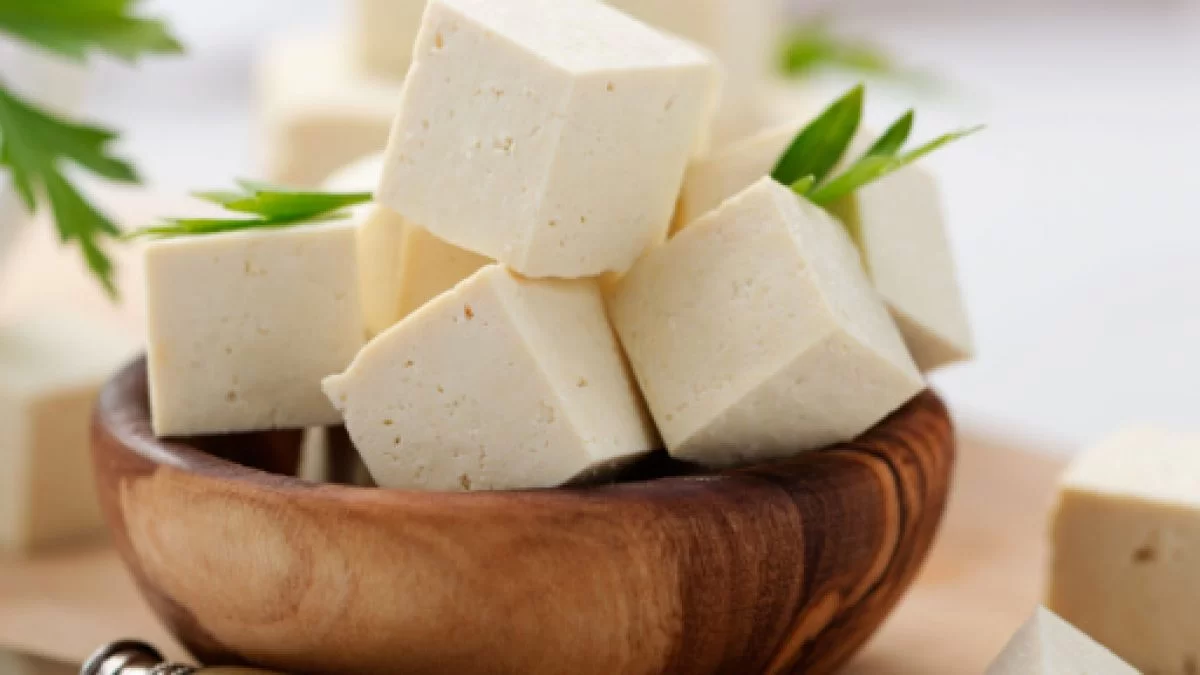
When comparing tofu vs paneer, tofu is generally lower in calories, saturated fat, and cholesterol, while paneer contains slightly more protein but significantly more fat. From a sustainability perspective, tofu has a lower environmental footprint because dairy production is more resource intensive than plant based soy production. The healthier choice depends on your dietary goals and environmental priorities.
Few vegetarian food comparisons are searched as often as tofu vs paneer. Both are rich in protein. Both are widely used in Indian cooking. Both can absorb spices and flavours beautifully. Yet nutritionally and environmentally they are very different foods.
Paneer is a dairy product made from milk. Tofu is made from soybeans. One relies on animal agriculture. The other relies on plant protein. That single difference influences everything from fat content to carbon emissions.
Let us examine the comparison properly.
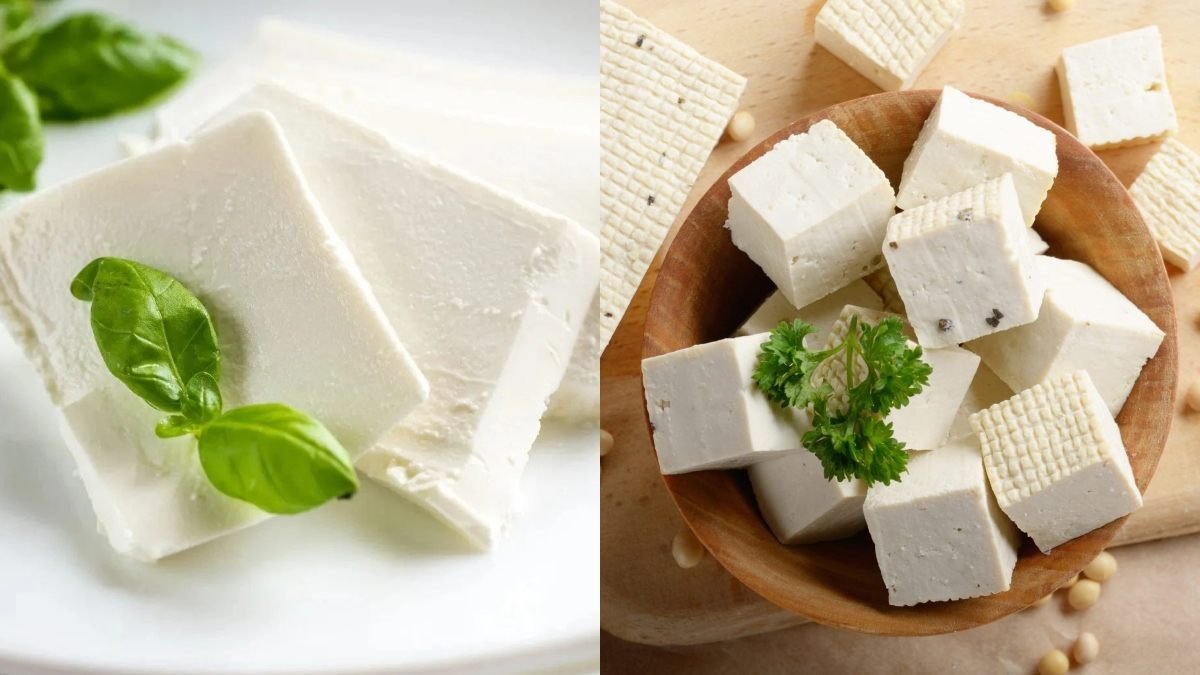
Paneer is a fresh cheese created by curdling milk using an acid such as lemon juice. It retains milk fat, which gives it a dense texture and higher calorie content.
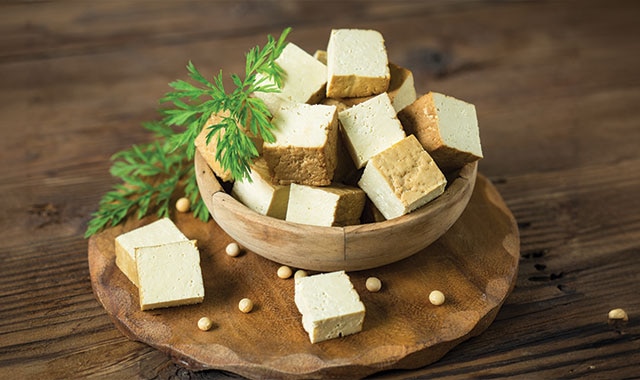
Tofu is produced by coagulating soy milk and pressing the curds into blocks. The process resembles cheese making, but the source ingredient is soybeans.
From a culinary standpoint they may look similar. From a biological and environmental standpoint they are fundamentally different.
Using general nutritional averages from USDA FoodData Central
Here is how tofu vs paneer compare per 100 grams.
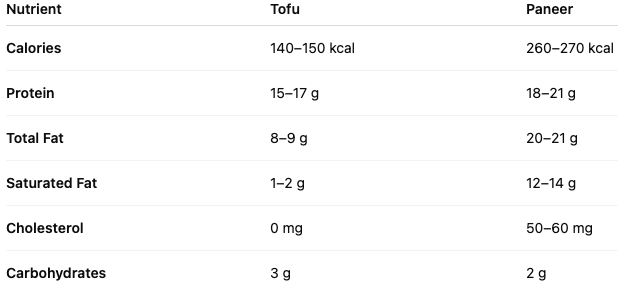
Paneer contains slightly more protein. However paneer also contains more than double the fat and significantly higher saturated fat.
This difference changes how each food affects long term health.
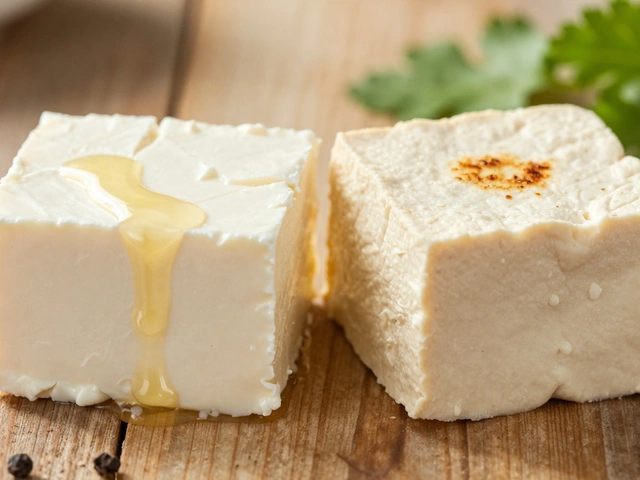
In most cases tofu is considered healthier than paneer because it contains less saturated fat and no cholesterol. High saturated fat intake is associated with increased LDL cholesterol levels. The World Health Organization recommends limiting saturated fat intake to reduce cardiovascular risk.
Tofu provides complete protein while keeping saturated fat relatively low. For individuals managing heart health, cholesterol, or calorie intake, tofu often becomes the more balanced option.
Paneer can still be nutritious when consumed in moderation, especially for those who require higher calorie density. However from a heart health perspective tofu generally has an advantage.
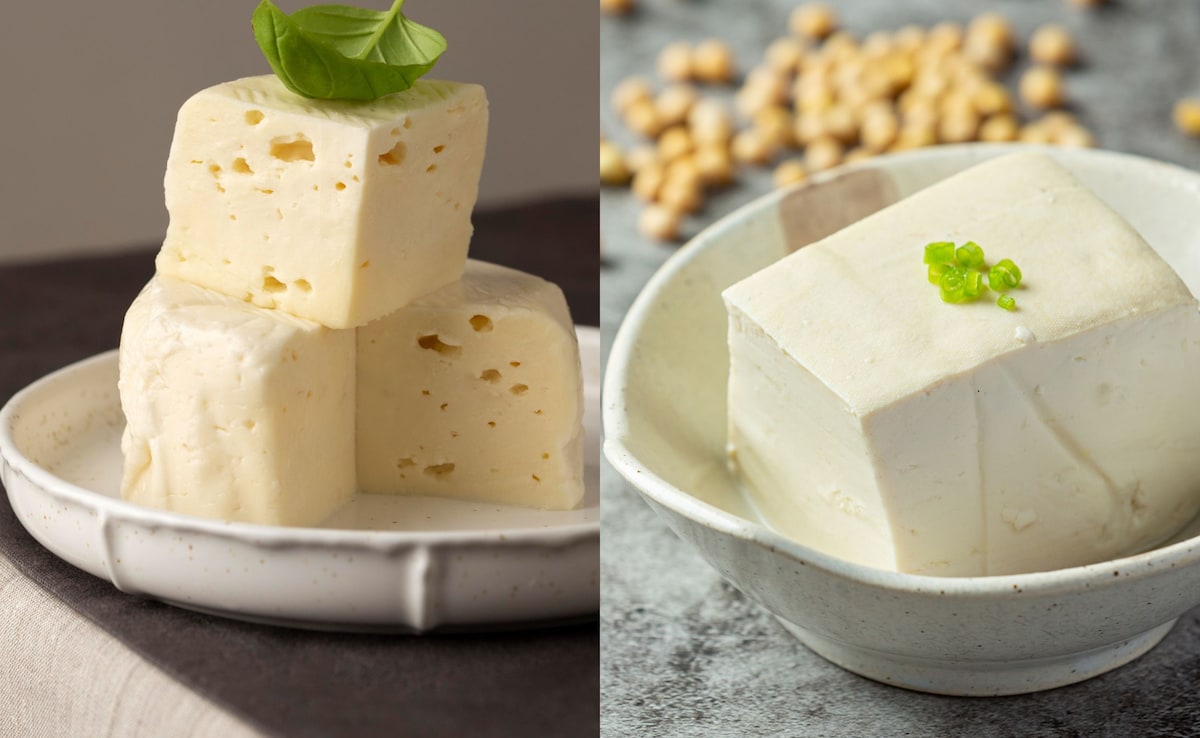
Protein is often the main reason people search for tofu vs paneer.
Paneer provides slightly more protein per 100 grams. However tofu also contains all nine essential amino acids, making it a complete protein. According to Harvard School of Public Health, soy protein is nutritionally adequate and high quality.
The difference in protein quantity is small compared to the difference in fat content.
If your goal is muscle gain, both can support protein needs. The deciding factor becomes overall calorie balance and fat intake.
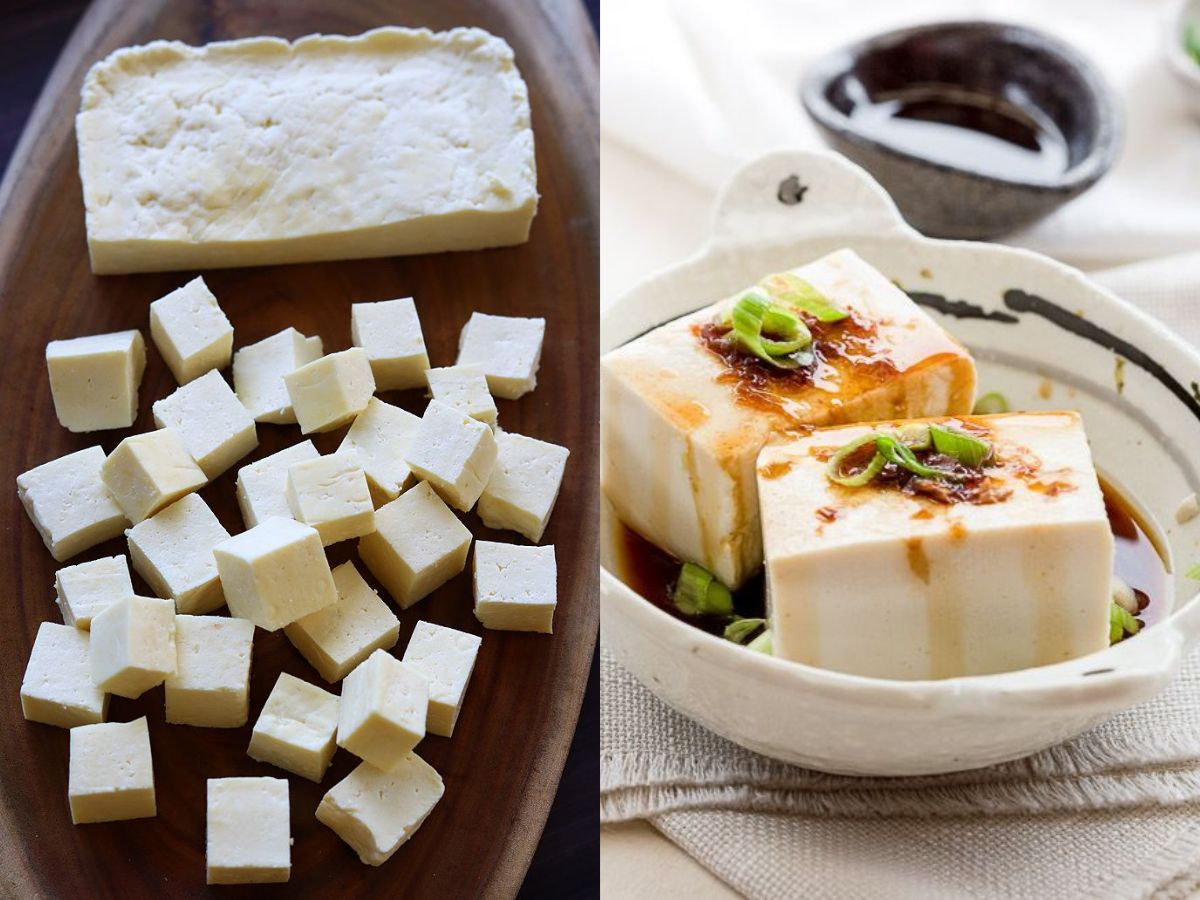
When comparing tofu vs paneer for weight loss, calorie density matters.
Paneer contains nearly twice the calories per 100 grams because of its fat content. While it is filling, portion sizes must be controlled carefully.
Tofu allows larger serving sizes for fewer calories. It makes it easier to maintain a calorie deficit while still meeting protein requirements.
For structured weight loss plans, tofu often provides more flexibility.

Paneer contains dietary cholesterol and high levels of saturated fat. Diets high in saturated fat are associated with cardiovascular risk.
Tofu contains no cholesterol and significantly lower saturated fat. Soy foods have been studied for their potential to help lower LDL cholesterol levels.
For individuals concerned about long term heart health, tofu is generally the safer daily choice.

The tofu vs paneer debate becomes even more interesting when environmental impact is considered.
Paneer is made from milk. Dairy production involves cattle. Cattle emit methane, a potent greenhouse gas. According to the Food and Agriculture Organization, livestock supply chains account for approximately 14.5 percent of global greenhouse gas emissions.
Dairy production also requires:
• Significant land for grazing and feed • High water consumption • Feed crop cultivation
Research from Our World in Data shows that dairy products have a much higher carbon footprint per kilogram compared to plant based proteins such as soy.
Tofu bypasses the animal stage entirely. Producing soy for direct human consumption is generally more resource efficient than growing feed for cattle and then producing dairy.
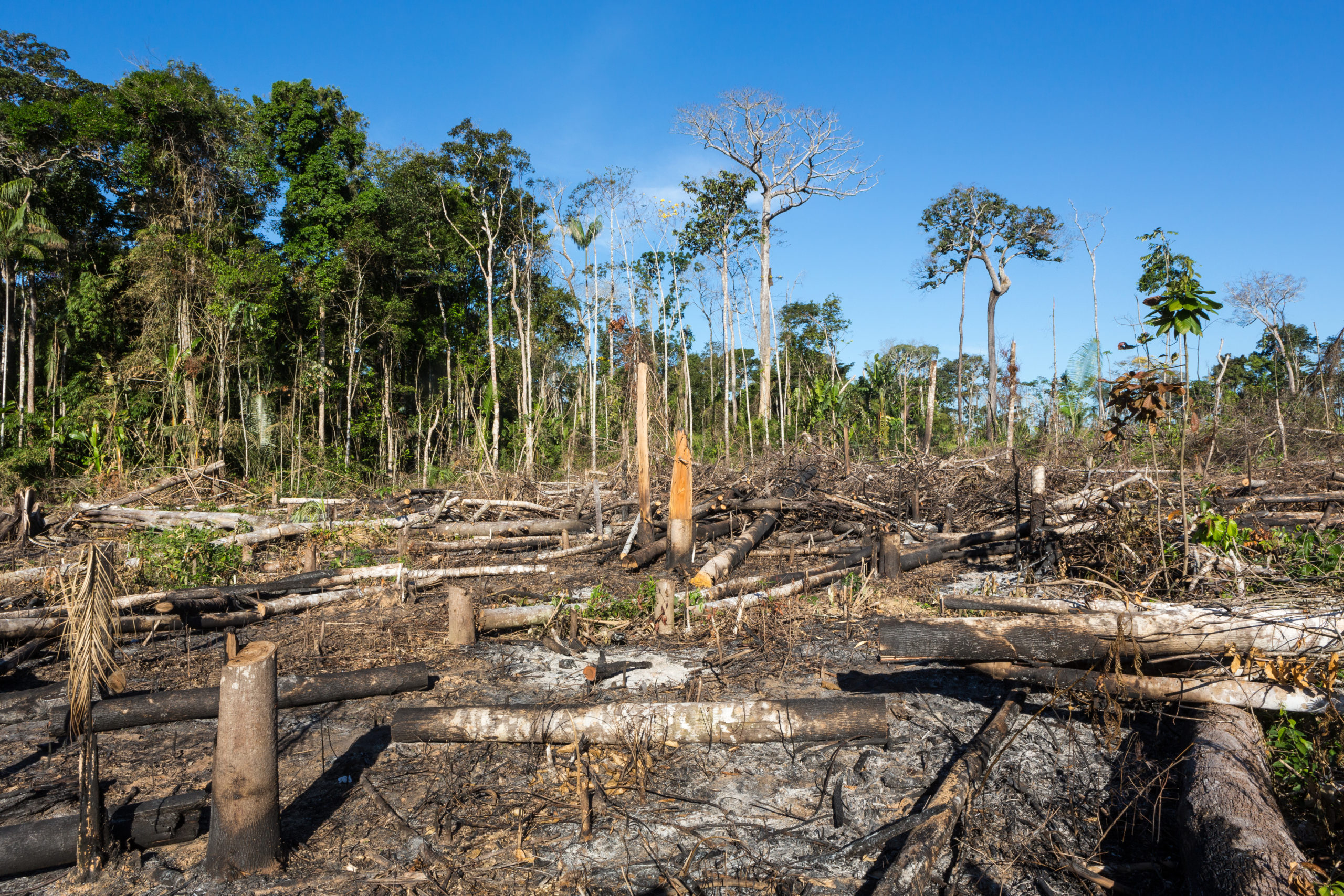
Some concerns about tofu relate to soy linked deforestation.
However most global soy production is used as animal feed rather than for tofu or soy milk. Our World in Data shows that only a small percentage of soy is consumed directly by humans https://ourworldindata.org/soy
Choosing tofu instead of dairy often reduces overall land use because it eliminates the inefficient step of feeding crops to livestock first.
Efficiency in food systems is crucial for sustainability.
Paneer has deep cultural roots in South Asian cuisine. It carries familiarity, tradition, and emotional connection.
Tofu, while versatile, may require adaptation in certain traditional recipes.
Food choices are rarely based solely on data. Culture and taste matter. A balanced approach might involve reducing paneer frequency while increasing plant protein intake.
When comparing tofu vs paneer:
• Tofu is lower in calories and saturated fat • Paneer contains slightly more protein • Tofu contains no cholesterol • Paneer is more calorie dense • Tofu generally has a lower environmental footprint
The healthier option depends on personal goals. The more sustainable option, in most cases, is tofu.
The real conversation is not about elimination. It is about proportion. Increasing plant based proteins while moderating high impact animal products can benefit both personal health and planetary health.
In a tofu vs paneer comparison, tofu is generally healthier because it contains less saturated fat and no cholesterol. Paneer has slightly more protein but is significantly higher in fat and calories.
Yes, paneer usually contains slightly more protein per 100 grams than tofu. However, the difference is small and tofu still provides complete plant based protein.
Tofu is often better for weight loss because it has fewer calories and lower fat content. Paneer is more calorie dense, which makes portion control more important.
Both tofu and paneer can support muscle gain if total protein intake is adequate. Paneer offers slightly more protein, but tofu provides a leaner protein source with less saturated fat.
Yes. Tofu contains no cholesterol and lower saturated fat compared to paneer. Diets lower in saturated fat are associated with improved heart health.
Paneer is not unhealthy when consumed in moderation. However, because it is high in saturated fat, excessive intake may increase cardiovascular risk over time.
Paneer has significantly more calories per 100 grams due to its higher fat content. Tofu is lighter and less calorie dense.
Tofu generally has a lower environmental footprint because it is plant based. Paneer relies on dairy production, which is more resource intensive and methane emitting.
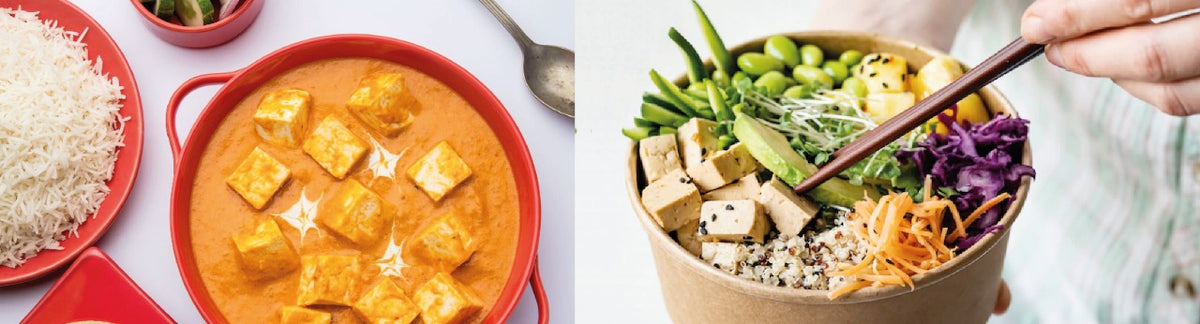
Yes. Tofu can replace paneer in many recipes such as curries and stir fries. The texture may differ slightly, but it absorbs spices well.
Related topics
Related Categories
Share this blog


